
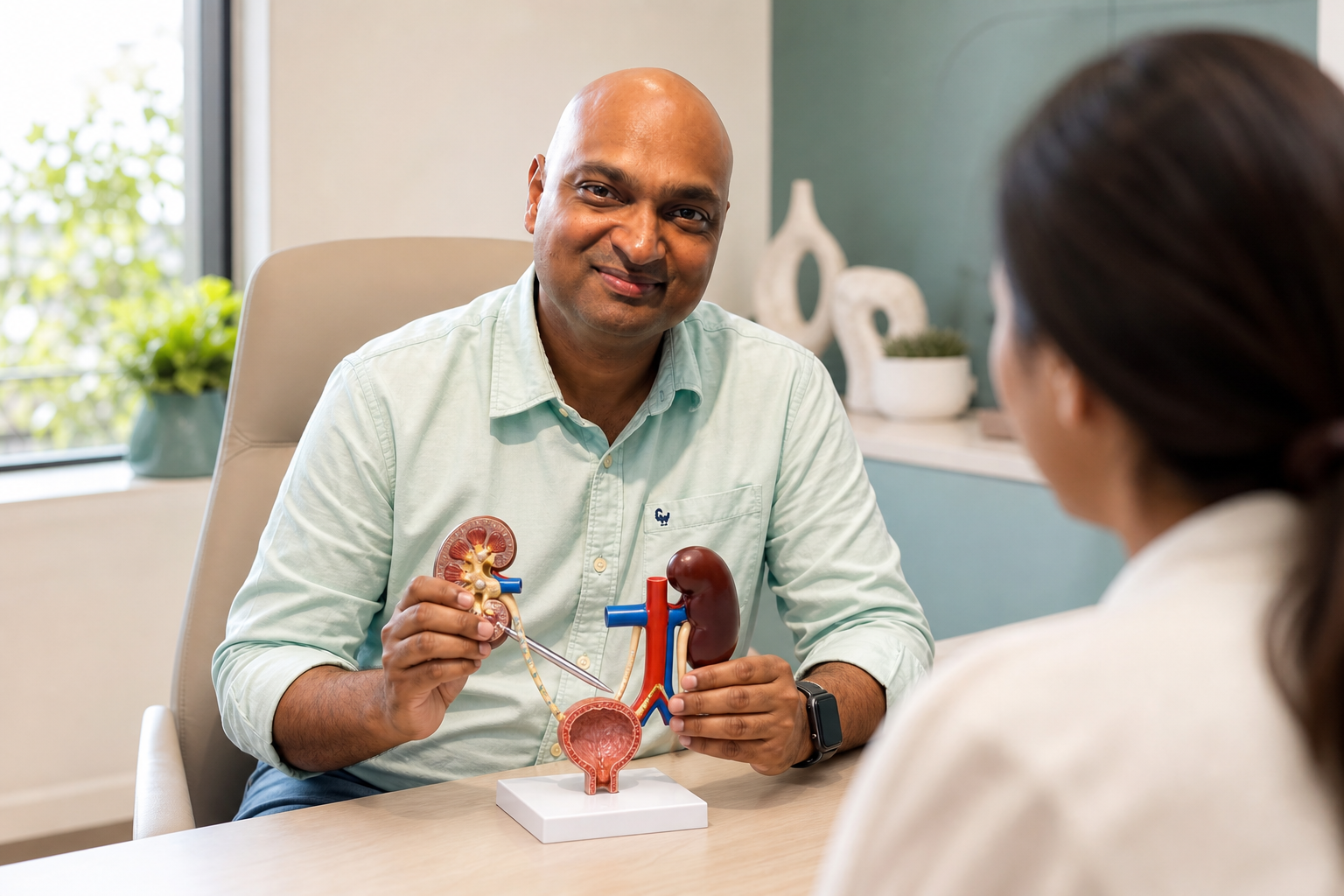
Severe pain in your side can be unsettling. Kidney stones are one possible explanation, but a social media post cannot tell you what is causing your symptoms. Getting assessed helps you understand what to do next.
Symptoms worth noticing
Small stones may cause few symptoms. Larger stones can cause strong pain in the side or groin that comes and goes, nausea or vomiting, and blood in the urine. Similar symptoms can have other causes, so avoid assuming that a stone is the answer. NHS: kidney stone symptoms
When to seek urgent care
Do not wait for a routine appointment if the pain is severe or you also have a fever or shivers. These symptoms need urgent medical assessment. Blood in the urine also deserves prompt attention. A stone can sometimes block the flow of urine and be associated with infection. NHS: symptoms and complications
What an assessment may involve
The doctor will consider your symptoms and medical history. Depending on the situation, urine or blood tests and imaging may help clarify the cause. The tests and treatment recommended depend on the individual; not everyone needs the same investigation. NHS: diagnosing kidney stones
Before a non-urgent consultation, make a short note of when symptoms started, how the pain behaves and any previous stones. Bring your medication list and any relevant results you already have. This gives you a useful starting point for your discussion.
Take the next step
For an appointment with Dr Eneshra Padayachee's urology practice in Ballito, call 032 586 0504 or email purologyreception@gmail.com. Book your appointment today. We're here to help.
This article is general education. Seek urgent care for severe symptoms rather than waiting for a routine booking.